DuraTerra BioM: a single, organic low-emission magnesium sulphate granule, engineered as a carrier — coated with a consortium of live, complementary microbes and built to survive the journey from spreader to root zone.
Everything about the granule is built around one job: getting living microbes to the root zone, alive and functional. The mineral core carries nutrients and structure. The coating carries biology. The architecture — the subject of DuraTerra's pending patent — is what carries both intact through handling, spreading and first contact with soil.
A magnesium sulphate base, chosen as a stable, spreadable carrier compatible with standard farm and land-management application equipment. No cold chain, extended ambient shelf life.
Multiple microbial species applied to the granule surface, selected to complement one another rather than act as a single isolated strain.
Engineered so the granule, and the biology it carries, breaks down where it can do the most good — in contact with the root system.
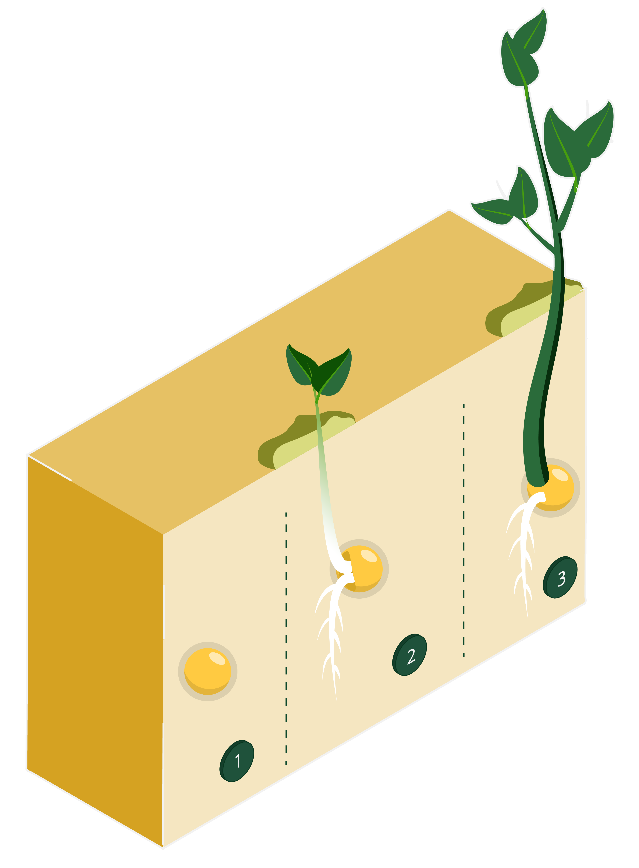
DuraTerra BioM is designed around a sequenced release: the mineral core begins conditioning the root zone first, then the microbial consortium establishes into soil that's already been prepared for it. The detailed release architecture is confidential, patent-pending IP — what we can say is the sequence itself is deliberate, not incidental.
The mineral core begins conditioning the root zone from first contact with soil moisture.
The coated consortium activates as conditions in the root zone become favourable.
Established biological activity continues to support root and soil health over the season.
Soil ecosystems function through interaction between many organisms, not the performance of a single species in isolation. DuraTerra's approach is to coat each granule with a consortium of complementary live microbes, designed to work together in the root environment — rather than relying on one strain to do every job.
Different microbial groups are selected for different roles in and around the root zone, rather than a single mode of action.
Designed with the variability of real paddock and field conditions in mind, not laboratory conditions alone — including acidic, nutrient-poor Australian broadacre soils.
Independent field-trial work is underway at a Western Australian broadacre site. Formal results, efficacy data and third-party verification will be published here as they're completed and confirmed — we won't publish figures we can't stand behind.
Magnesium sulphate provides a stable, low-emission base that is straightforward to store, handle and spread with existing equipment — while helping address soil acidity and aluminium toxicity common in Western Australian broadacre soils, and giving the microbial coating a practical way to reach the paddock, pasture or rehabilitation site.
Stable at ambient temperature with an extended shelf life — no refrigeration or specialised storage required.
Chosen as part of an approach oriented toward reducing input emissions intensity and supporting soil organic carbon rebuilding over time.
Designed to be spread using the equipment and programs growers and land managers already run — no new machinery required.
Supporting soil organic carbon is a natural extension of what DuraTerra BioM is designed to do. We're developing an approach to carbon insetting — verified carbon improvement that stays inside the agricultural supply chain, rather than being sold off as a separate offset — working toward recognised methodologies and third-party standards as that program matures.
program in development — methodology, verification pathway and commercial terms are still being finalised; we'll publish specifics once they're confirmed.
Growers and land managers increasingly need to demonstrate emissions performance across their supply chain. A carbon layer built on real soil-carbon improvement — rather than purchased offsets — keeps that value inside the farm business and the chain it supplies.
We're building an evidence base through independent field trials and seeking further research partnerships, trial sites and technical review. If you're a soil scientist, microbiologist or agronomist, we'd like to talk.